
Makar Sankranti – Festival of Sun, Harvest, and Spiritual Renewal
Makar Sankranti brings great devotion and cultural excitement to people throughout India. It occurs annually on January 14th based on the solar calendar to mark the Sun’s movement into Makar (Capricorn) and its northern path (Uttarayan).
The festival brings an end to winter solstice and starts a period of longer days with increasing warmth and energy and hope and prosperity. The festival represents a dual significance because it signals both astronomical changes and spiritual and agricultural renewal for millions of people. In 2026, Makar Sankranti will be celebrated on Wednesday, January 14
Spiritual and Seasonal Significance
The Hindu faith considers Makar Sankranti to be a sacred celebration which holds deep meaning in their philosophical and cultural traditions. The term “Sankranti” describes the Sun’s movement between different zodiac signs. The twelve Sankrantis throughout the year bring Makar Sankranti as the most sacred occasion because it marks the start of Uttarayan which Hindus consider a six-month period of spiritual advancement and divine blessings.
Bhishma Pitamah from the Mahabharata chose to depart from his physical body during Uttarayan according to sacred texts which demonstrates the spiritual value of this time. People who pass away during Uttarayan achieve spiritual liberation known as moksha.
The festival takes place during the harvest season which leads people to express their appreciation for the farmers’ work. People honor Surya Dev through rituals and feasting while showing gratitude for his life-giving power and nature’s abundant harvest.
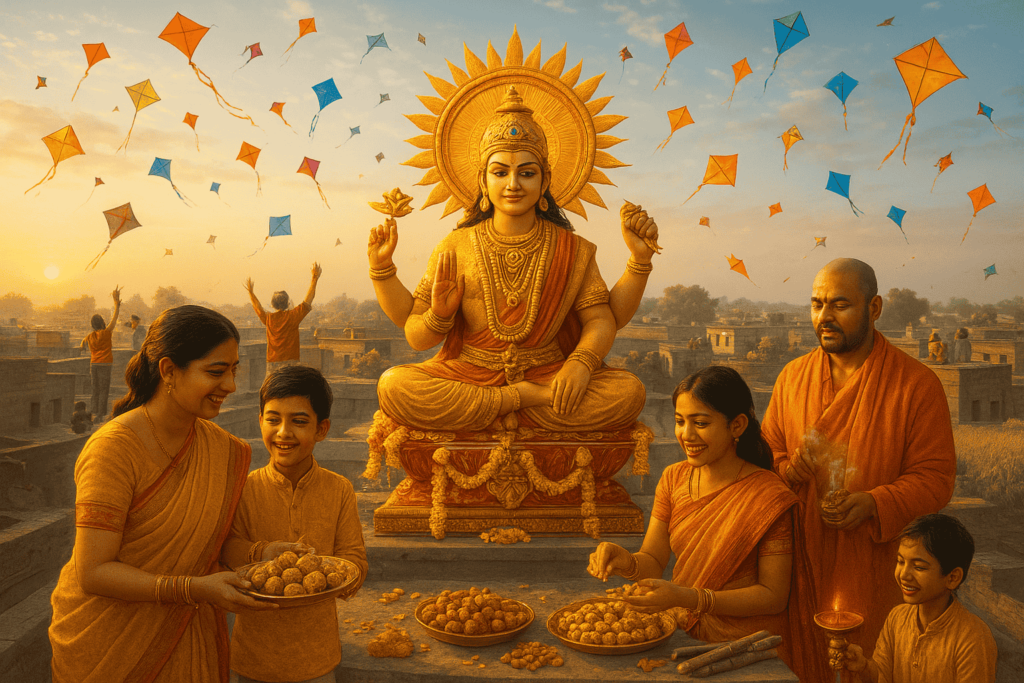
Mythological References
- Surya and Shani: According to Hindu legends, Makar Sankranti marks the day when Surya (Sun God) visits his son Shani (ruler of Capricorn). Their meeting symbolizes harmony and the importance of family ties.
- Ganga’s Descent: It is also believed that on this day, the sacred river Ganga descended to Earth following King Bhagirath’s penance, sanctifying the land.
- Lord Vishnu’s Victory: In some traditions, the day marks Lord Vishnu’s victory over demons, symbolizing the triumph of dharma over adharma.
These mythological tales add spiritual depth to the festival, making it not just a solar event but a sacred occasion celebrated across the subcontinent.
Shloka on Surya Dev
Devanagari:
ॐ घृणि: सूर्याय नमः।Transliteration:
Om Ghrinih Suryaya Namah
Meaning:
“I bow to Lord Surya, the source of light, energy, and life, who removes darkness and guides us on the path of truth.”
Chanting this mantra during Makar Sankranti, especially at sunrise, is believed to purify the mind and soul.
Rituals and Traditions of Makar Sankranti
Makar Sankranti exists with different practices throughout India yet people maintain the core values of worship and thanksgiving and mutual sharing.
- Holy Bath (Snan): People consider bathing in sacred rivers Ganga, Yamuna, Godavari, Krishna and Kaveri to be the most sacred act which grants spiritual rewards. The Makar Snan ritual allows people to cleanse their sins while receiving sacred blessings from the divine.
- Worship of Surya Dev: People perform the Ar for blessings of health and prosperity and wisdom.
- Daan-Punya (Charity): Theghya ritual by offering water to the sun while reciting Surya mantras and they ask practice of giving food and clothing and especially sesame seeds and jaggery brings great spiritual benefits to donors. The practice of giving charity during this time period leads to increased spiritual rewards.
- Traditional Foods: People create traditional dishes using til (sesame) and gud (jaggery) together with rice and khichdi. The people of Maharashtra share til-gud laddus during this time while saying “Tilgul ghya, god god bola” which means “Accept these sweets and speak sweet words.”
- Kite Flying: People in Gujarat along with some North Indian regions use kite flying as a way to celebrate the longer days of sunlight. People fill the sky with colorful kites during this time to celebrate the arrival of warmer weather.
- Bonfires and Cultural Gatherings: During Lohri in Punjab people light bonfires while singing traditional songs and dancing but Assam celebrates Magh Bihu through communal feasts and social events.
Regional Variations
Makar Sankranti is unique because though celebrated nationwide, it takes on different names and flavors in different regions:
- Pongal (Tamil Nadu): A four-day harvest festival thanking Sun God and cattle.
- Uttarayan (Gujarat): Known for kite flying and festive meals.
- Lohri (Punjab & Haryana): Bonfires, dancing, and celebrating winter’s end.
- Magh Bihu (Assam): Community feasts and traditional games.
- Khichdi Parv (Uttar Pradesh & Bihar): Offering khichdi, til, and gud in temples.
- Makara Vilakku (Kerala, Sabarimala): A spiritual event marking the appearance of divine light.
Each region adds its own cultural charm, yet the spirit of devotion to the Sun God unites them all.
Symbolism of Makar Sankranti
Light over Darkness: Longer days symbolize the victory of positivity and knowledge.
Balance of Life: Til (sesame) represents hard work and gud (jaggery) represents sweetness – together they signify harmony.
Gratitude to Nature: Farmers thank the Sun, Earth, and cattle for sustaining life.
Spiritual Progress: Beginning of Uttarayan inspires seekers to embrace spiritual practices.
Modern Relevance
Makar Sankranti continues to hold deep meaning for people in our current quick-paced society. The festival teaches us about our bond with nature while emphasizing the practice of appreciation and the strength of communal relationships. People across rural and urban areas observe the celebration through their preparation of traditional foods and kite flying and sacred rituals which they perform with complete dedication.
The scientific process of Sun’s movement demonstrates how ancient traditions maintained perfect harmony with astronomical observations and natural periodic events.
Conclusion
Makar Sankranti serves as a festival which honors cosmic order while expressing gratitude and spiritual growth. The festival unites people from all walks of life while promoting generosity and compassion and showing us the endless rhythm of natural cycles.
The Sun’s northern path marks the beginning of a new cycle which should bring illumination and understanding and wellness and success to all people.
Makar Sankranti represents more than solar movement because it guides people toward enlightenment through the transition from ignorance to knowledge and from individualism to communal sharing.
Frequently Asked Questions (FAQs) on Makar Sankranti
It is observed every year on 14th January, marking the Sun’s entry into Capricorn (Makar Rashi) and the beginning of Uttarayan (the Sun’s northward journey).
The festival marks both an astronomical transition (change of the Sun’s path) and a spiritual renewal. It is believed to be a time for purification, charity, thanksgiving, and seeking Surya Dev’s blessings for health, prosperity, and enlightenment.
Common observances include:
- Sacred bath (Snan) in holy rivers.
- Worship of Surya Dev by offering arghya at sunrise.
- Daan-punya (charity), especially sesame seeds, jaggery, food, and clothes.
- Preparing and sharing til-gud sweets and khichdi.
- Kite flying, bonfires, and cultural gatherings in various regions.
Traditional dishes made of til (sesame), gud (jaggery), rice, and khichdi are most common. In Maharashtra, people share til-gud laddus with the saying “Tilgul ghya, god god bola” (accept sweets and speak sweetly).
Regional celebrations include:
- Tamil Nadu: Pongal (four-day harvest festival).
- Gujarat: Uttarayan with colorful kite flying.
- Punjab & Haryana: Lohri with bonfires and folk songs.
- Assam: Magh Bihu with feasts and traditional games.
- Uttar Pradesh & Bihar: Khichdi Parv with temple offerings.
- Kerala (Sabarimala): Makara Vilakku, the divine light festival.
Bathing in sacred rivers like the Ganga or Yamuna during this time is believed to wash away sins, purify the soul, and bring divine blessings.
Sesame (til) represents hard work and endurance, while jaggery (gud) symbolizes sweetness and warmth. Together, they teach harmony, balance, and the importance of both effort and kindness in life.
Some popular legends include:
- Surya Dev visiting his son Shani, symbolizing harmony.
- The descent of the sacred river Ganga.
- Lord Vishnu’s victory over demons, signifying dharma’s triumph.
Kite flying celebrates the longer days of sunlight and symbolizes joy, freedom, and rising higher with the light of knowledge and positivity.
Even today, it reminds us to stay connected with nature, value gratitude and charity, and cherish community bonding. The festival blends ancient astronomical wisdom with cultural joy, making it meaningful across generations.
Also Read – Maha Shivratri
Also Read- Saraswati Puja